
Perimenopause vs. Menopause: What Is Actually Different, and Why It Changes Your Care

Last updated: April, 2026
Written by the Concierge Medicine of Westlake care team · Medically reviewed by Alexa Fiffick, DO, MBS, MSCP
Something shifts. Maybe your sleep has been off for months. Your periods are no longer predictable. You feel unlike yourself in ways that are hard to articulate, and when you bring it up with a doctor, you are told it is probably stress.
This is one of the most common stories women carry into Dr. Alexa Fiffick's practice at Concierge Medicine of Westlake. And it is one she takes seriously because the hormonal changes that begin years before your last period are real, measurable, and worth addressing with the same clinical rigor as anything else in your health history.
Understanding the difference between perimenopause and menopause is not a semantic exercise. It directly shapes what your symptoms mean, what testing is appropriate, and what treatment options make sense for where you are in this transition.
Two Distinct Phases, One Continuum
Perimenopause and menopause are related, but not the same, and conflating them leads to care that misses the mark.
Perimenopause is the transitional phase during which your ovaries gradually produce less estrogen. It typically begins in your 40s, though some women notice changes in their late 30s. What defines perimenopause is variability: hormone levels are not declining in a straight line. They fluctuate, sometimes dramatically, from month to month and even week to week. Your periods are still happening, but they may be irregular in timing, duration, or flow. This unpredictability is the hallmark of the perimenopausal phase.
Menopause, by clinical definition, is a single point in time: 12 consecutive months without a menstrual period. After that threshold, you are postmenopausal. The average age in the United States is 51, though the range spans the mid-40s through the mid-50s. Unlike perimenopause, menopause is characterized by hormone levels that have reached a new, lower baseline. They are no longer swinging.
The distinction matters because your symptoms behave differently in each phase, and treatment approaches differ accordingly.
Why Perimenopause Is Harder to Recognize
Perimenopause does not arrive with a clear signal. It tends to accumulate quietly: a few nights of poor sleep here, a heavier period there, an irritability that feels disproportionate to circumstance. Because hormone levels are fluctuating rather than falling steadily, symptoms can appear and disappear. You might have significant hot flashes for three months and then feel fine for two. That inconsistency often leads both patients and clinicians to dismiss what is happening.
Common symptoms during perimenopause include irregular menstrual cycles, sleep disruption, hot flashes and night sweats, mood changes, difficulty concentrating, shifts in libido, and changes in weight distribution, particularly around the midsection. None of these is unique to perimenopause, which is part of why they get attributed to stress, thyroid issues, or simply getting older.
The most useful clinical clue is the pattern. If you are in your 40s and experiencing several of these symptoms simultaneously, particularly alongside menstrual irregularity, perimenopause deserves to be part of the conversation, even if basic hormone tests come back within normal range. During perimenopause, standard FSH levels can be entirely normal on the day blood is drawn, because hormone levels may have been elevated the week before and will shift again after.
When Does Perimenopause Begin
The average onset of perimenopause is around age 47, but that average conceals a wide range. Some women begin noticing changes in their late 30s. Others do not experience significant symptoms until their early 50s.
Genetics plays a meaningful role. If your mother or sisters entered perimenopause earlier than average, your timeline may follow a similar pattern. Smoking is associated with an earlier onset. A history of certain autoimmune conditions, surgical history, and cancer treatment can also affect when and how perimenopause begins.
The duration varies just as much as the onset. Most women are in perimenopause for around four years, but the range extends from a few months to a decade. There is no way to predict how long this phase will last for any individual woman, which is one reason why ongoing monitoring and a clinical relationship matter more than a one-time hormone panel.
How Symptoms Differ Between the Two Phases
In perimenopause, the unpredictability itself is a symptom. Hot flashes may come and go. Sleep may be fine for weeks, then become disruptive. Mood can shift without an obvious trigger. This volatility results from hormones that fluctuate rather than remain stable.
In menopause and the postmenopausal years, symptoms often become more consistent. Estrogen has settled at a lower level, and the body is adjusting to that new baseline. Hot flashes may persist but tend to follow a more predictable pattern. Vaginal dryness becomes more prominent for many women. Bone density changes accelerate in the years immediately following menopause, which is why monitoring and preventive care during this window matters.
Sleep challenges are present in both phases, but for different reasons. During perimenopause, fluctuating hormones disrupt sleep architecture. In the postmenopausal period, consistently low estrogen levels affect sleep quality differently. Treating them the same way is not clinically appropriate, which is one more reason why knowing which phase you are in matters.
Many women find they feel more settled emotionally once they reach menopause, not because symptoms disappear, but because the hormonal unpredictability levels out. Others find menopause brings its own challenges. Both experiences are valid, and both deserve individualized attention.
What Proper Evaluation Actually Looks Like
A single hormone blood test on a single day does not tell the full story of perimenopause. Hormone levels during this phase are moving targets. FSH, estradiol, and progesterone can all read within normal limits on any given Tuesday while still producing significant symptoms throughout the month.
Thorough evaluation involves a detailed symptom history, documentation of menstrual patterns, consideration of family history and medical background, and, in some cases, serial hormone testing over time. It also involves listening, which takes more than a 15-minute appointment to do well.
This is where the concierge model makes a concrete difference. At Concierge Medicine of Westlake, Dr. Fiffick has the time to take a complete clinical picture. There is no rushing through the intake, no symptom checklist that gets cut short. A woman coming in to talk about sleep disruption and mood changes in her mid-40s gets a comprehensive evaluation, not a reassurance that this is normal, and she should come back if it gets worse.
Treatment options vary depending on where a woman is in her transition, her health history, her symptoms, and her preferences. Hormone therapy, when appropriate, looks different for someone in early perimenopause than for someone who is two years postmenopausal. Lifestyle factors, sleep hygiene, and other interventions are part of the conversation, not secondary considerations.
Getting Answers That Match What You Are Actually Experiencing
Women deserve care that takes hormonal transitions seriously at every stage, not just after the fact. Too often, the years of perimenopause pass with inadequate support because the symptoms are variable and the standard of care for this phase is underdeveloped in conventional settings.
Dr. Fiffick's practice is built around a different approach: one that combines primary care and menopause medicine in a model that allows for the depth and continuity a transition like this requires. Whether you are in your late 30s, wondering if what you are experiencing is hormonal, in your mid-40s, managing irregular cycles and poor sleep, or approaching or past menopause and looking for clearer answers, this is care designed to meet you where you are.
You don't have to figure this out in a rushed 15-minute visit. At Concierge Medicine of Westlake, Dr. Alexa Fiffick, DO, MBS, MSCP is a board-certified family medicine physician and Menopause Society Certified Practitioner, so the same doctor who manages your hormones also knows your full health history and has the time to connect the dots. See how membership works or schedule a visit. Prefer to talk first? Call 440-797-1871.













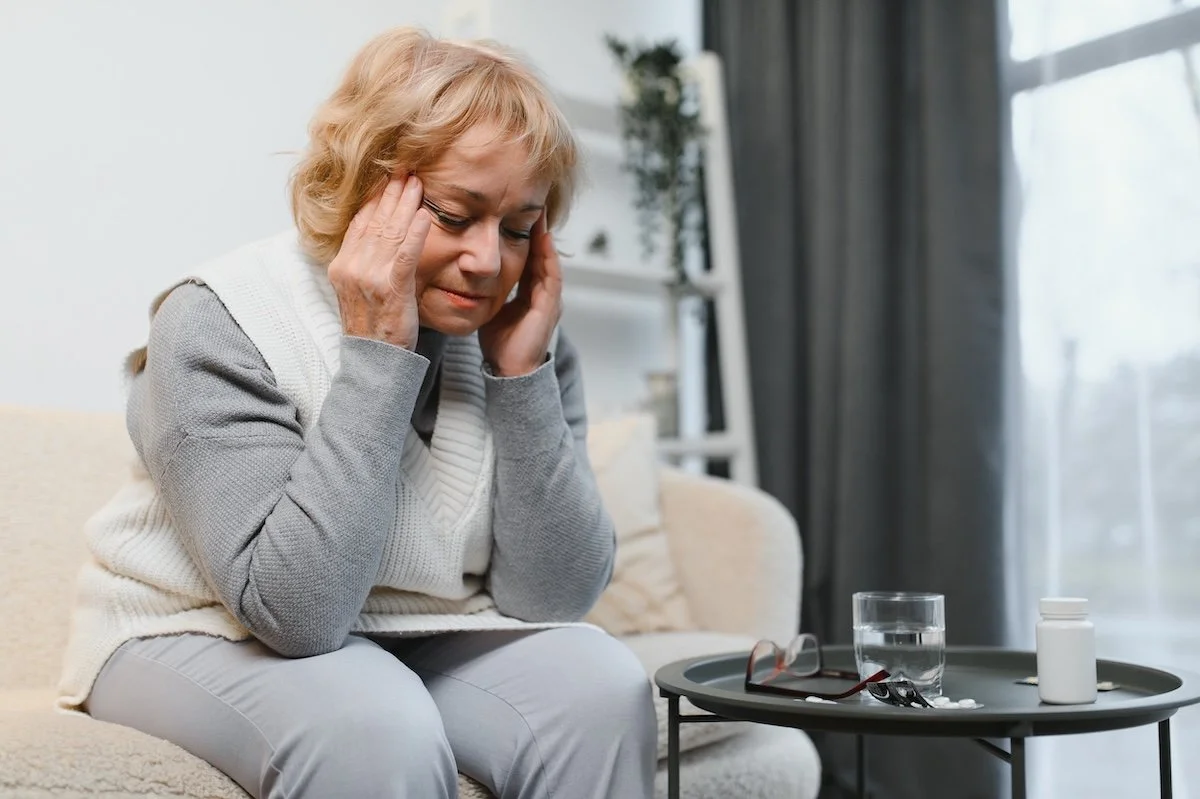











You searched your symptoms and got two answers. One set of pages says perimenopause. The other says thyroid. Both lists look like your life — and they overlap almost completely. The tell is usually not the symptom itself but its trajectory, which takes a history nobody has time to take in fifteen minutes.