
Why So Many Women Feel Unprepared for Perimenopause - And What to Do About It

Last updated: May, 2026
Written by the Concierge Medicine of Westlake care team · Medically reviewed by Alexa Fiffick, DO, MBS, MSCP
Most women know menopause is coming. Far fewer are prepared for what comes first.
Perimenopause, the transitional phase that precedes menopause, can begin years before a woman's last menstrual period. For many women, it starts in their early to mid-forties, sometimes even late thirties, and it rarely announces itself clearly. Instead, it tends to arrive as a collection of symptoms that don't immediately point to hormones: sleep that suddenly feels fragile, moods that shift without explanation, a mental fog that makes it hard to stay sharp at work, or cycles that become unpredictable after decades of regularity.
What makes perimenopause particularly difficult is that the medical system often fails to name it. Women describe going to appointments, listing their symptoms, and leaving with referrals to therapists, sleep specialists, or cardiologists. They are told they are stressed, overextended, or just getting older. The possibility that fluctuating estrogen and progesterone might be driving everything from their anxiety to their joint pain to their night sweats rarely enters the conversation. And because it doesn't, women are left to interpret a significant hormonal transition largely on their own.
This is a gap that has real consequences for women's health — in Westlake, in Cleveland, and across the country.
What Perimenopause Actually Involves
Perimenopause is the period of hormonal fluctuation that leads up to menopause, which is formally defined as 12 consecutive months without a menstrual period. The perimenopausal transition typically lasts between four and eight years, though it varies significantly from person to person.
During this time, estrogen and progesterone levels become erratic rather than simply declining in a straight line. This irregularity is responsible for the wide range of symptoms women experience, and it also explains why symptoms can feel so unpredictable. A woman might have two months with minimal disruption followed by weeks of poor sleep, heightened anxiety, and hot flashes. Or she might notice her cycles shortening for a year, then lengthening again, before becoming irregular in a more sustained way.
The most commonly reported perimenopause symptoms include:
Irregular or heavier menstrual periods
Hot flashes and night sweats
Sleep disruption and insomnia
Brain fog and difficulty concentrating
Mood changes, including increased anxiety or irritability
Persistent fatigue
Vaginal dryness and changes in libido
Joint aches and general physical discomfort
These symptoms exist on a spectrum. Some women move through perimenopause with relatively minor disruptions. Others find that the transition significantly affects their quality of life, their relationships, and their ability to perform at work. What is consistent across the research is that most women are not adequately educated about what to expect, and many do not receive appropriate care when they seek it.
Why the Gap Exists
The educational gap around perimenopause is partly a function of how women's health has historically been taught and practiced. The numbers tell a clear story.
A cross-sectional survey of residents across family medicine, internal medicine, and OB/GYN programs, conducted by researchers at Mayo Clinic and published in the journal Menopause, found that only 6.8% of respondents reported feeling adequately prepared to manage women experiencing menopause. A separate 2023 national needs assessment of OB/GYN residency program directors found that only 31.3% reported having a menopause curriculum in their residency program, with the majority of program directors expressing a desire for more standardized educational resources. Researchers concluded that most obstetrics and gynecology training programs lack the curriculum necessary to prepare residents to manage menopausal women effectively.
This means that many of the physicians women see in their forties have not received formal instruction in perimenopause recognition, hormonal pattern interpretation, or evidence-based treatment options. When a woman describes fatigue and sleep disruption alongside irregular cycles, the connection between those symptoms and hormone fluctuation may not be part of the clinical framework her doctor is working from.
The result is that women are frequently told their symptoms are attributable to stress, anxiety, depression, or the general demands of midlife. Some are prescribed antidepressants or sleep aids without a conversation about the underlying hormonal picture. Others are reassured that what they're experiencing is normal and that there is little to be done. Both of those responses leave women without real support during a transition that often spans the better part of a decade.
The Case for Proactive Care
National Women's Health Week, this year themed "Prevention, Innovation, and Impact: A New Era in Women's Health," is a useful moment to ask what a more proactive approach to perimenopausal care looks like in practice.
It starts with recognition. A provider who understands the hormonal patterns of perimenopause can help a woman name what she is experiencing rather than leaving her to piece it together through late-night internet searches. That alone matters. Being told, clearly and without dismissiveness, that your symptoms are hormonally driven and that there are ways to address them is a different clinical experience than being handed a referral and sent home.
It continues with a thorough evaluation. Perimenopause is a clinical diagnosis, meaning it is based primarily on symptoms and menstrual history rather than on a single blood test. A comprehensive evaluation can also include lab work to assess thyroid function, iron levels, and other factors that can overlap with or amplify perimenopausal symptoms. Understanding the full picture matters for treatment planning.
And it requires individualized discussion of options. The Menopause Society's current position is that for healthy women under 60, or within 10 years of menopause onset, hormone therapy is an appropriate option for managing bothersome symptoms and carries a favorable risk-benefit profile for most. Lifestyle approaches, non-hormonal medications, and other interventions are also part of the conversation. What matters is that women have access to a provider who knows the evidence and takes the time to discuss options in the context of an individual patient's history, preferences, and goals.
What This Looks Like in a Concierge Practice
At Concierge Medicine of Westlake, Dr. Alexa Fiffick, DO, provides primary care and menopause care to women in Westlake and throughout the greater Cleveland area with the kind of depth that traditional primary care appointments rarely allow.
The concierge model is built around a few principles that matter especially during a complex health transition:
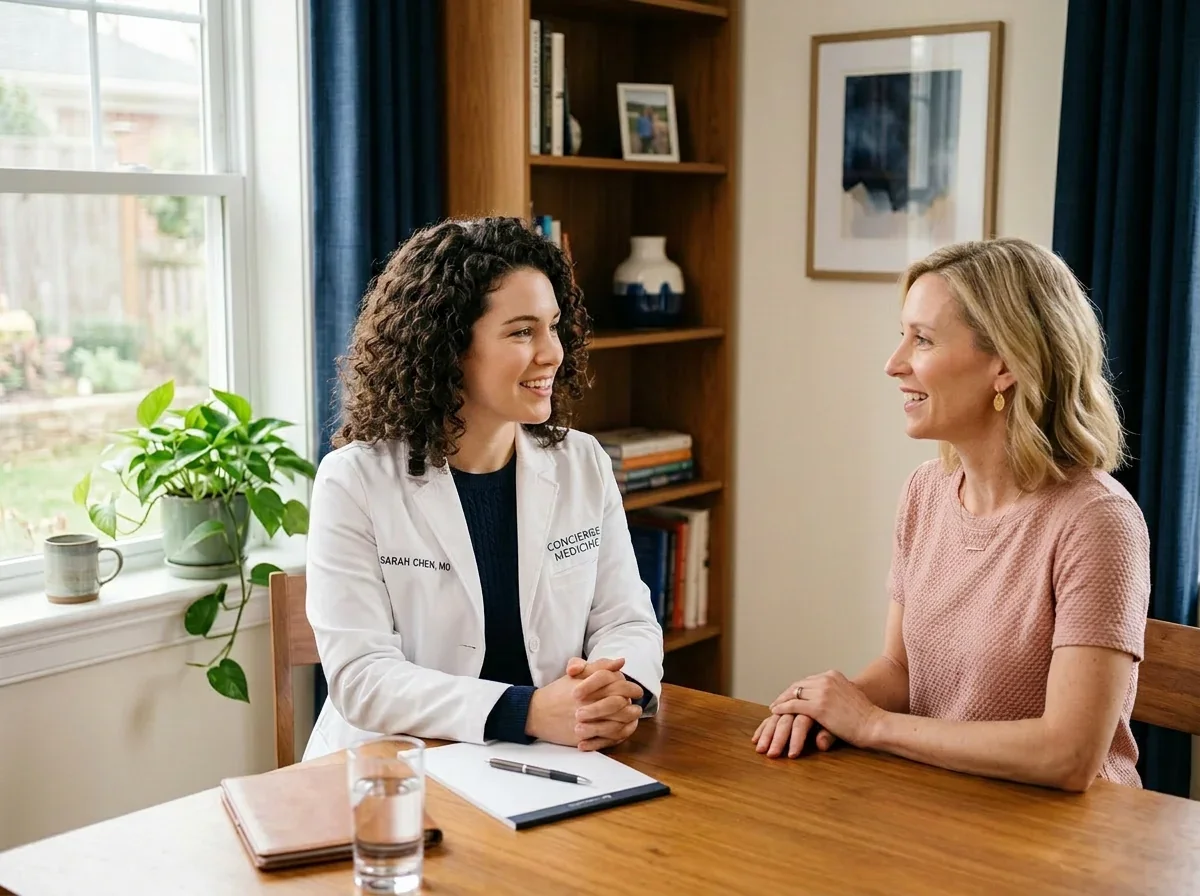
Time. Appointments are not constrained by the 15-minute clock that shapes most conventional primary care visits. A woman can walk in and spend real time talking through her symptoms, history, concerns, and questions. She can come in with a list and know she will not be cut off before she gets to the end of it.
Continuity. Dr. Fiffick maintains an ongoing relationship with each patient, which means she understands context over time rather than evaluating a single snapshot at each visit. For a condition like perimenopause, where symptoms shift and evolve over years, that longitudinal perspective matters clinically.
Whole-picture thinking. The symptoms of perimenopause are often interdependent. Sleep disruption affects mood. Mood changes affect relationships and work performance. Fatigue reduces motivation to exercise, which in turn affects metabolic health, with downstream implications for cardiovascular and bone health. Understanding how these threads connect requires a provider who looks at the full picture, not just the presenting complaint.
For women in Westlake, Avon Lake, Bay Village, Rocky River, and the surrounding communities who have felt dismissed, unheard, or simply underprepared for what perimenopause brings, Dr. Fiffick's practice offers a different kind of experience.
Getting the Support You Deserve
Perimenopause is not a malfunction. It is a normal biological transition, and it deserves to be treated as such. That means education, not dismissal. Evaluation, not assumption. Individualized care, not a one-size-fits-all approach or a referral out without follow-through.
If you are in your forties and noticing changes that don't quite add up, or if you have been told your symptoms are just stress when you know something more is happening, it is worth seeking out a provider who specializes in this transition. You do not have to white-knuckle your way through the next several years. There are options, and there are physicians who know them.
Dr. Alexa Fiffick and the team at Concierge Medicine of Westlake welcome women at every stage of the perimenopause and menopause transition. Scheduling a comprehensive evaluation is a practical first step toward understanding what is driving your symptoms and what can be done about it.
You don't have to figure this out in a rushed 15-minute visit. At Concierge Medicine of Westlake, Dr. Alexa Fiffick, DO, MBS, MSCP is a board-certified family medicine physician and Menopause Society Certified Practitioner, so the same doctor who manages your hormones also knows your full health history and has the time to connect the dots. See how membership works or schedule a visit. Prefer to talk first? Call 440-797-1871.












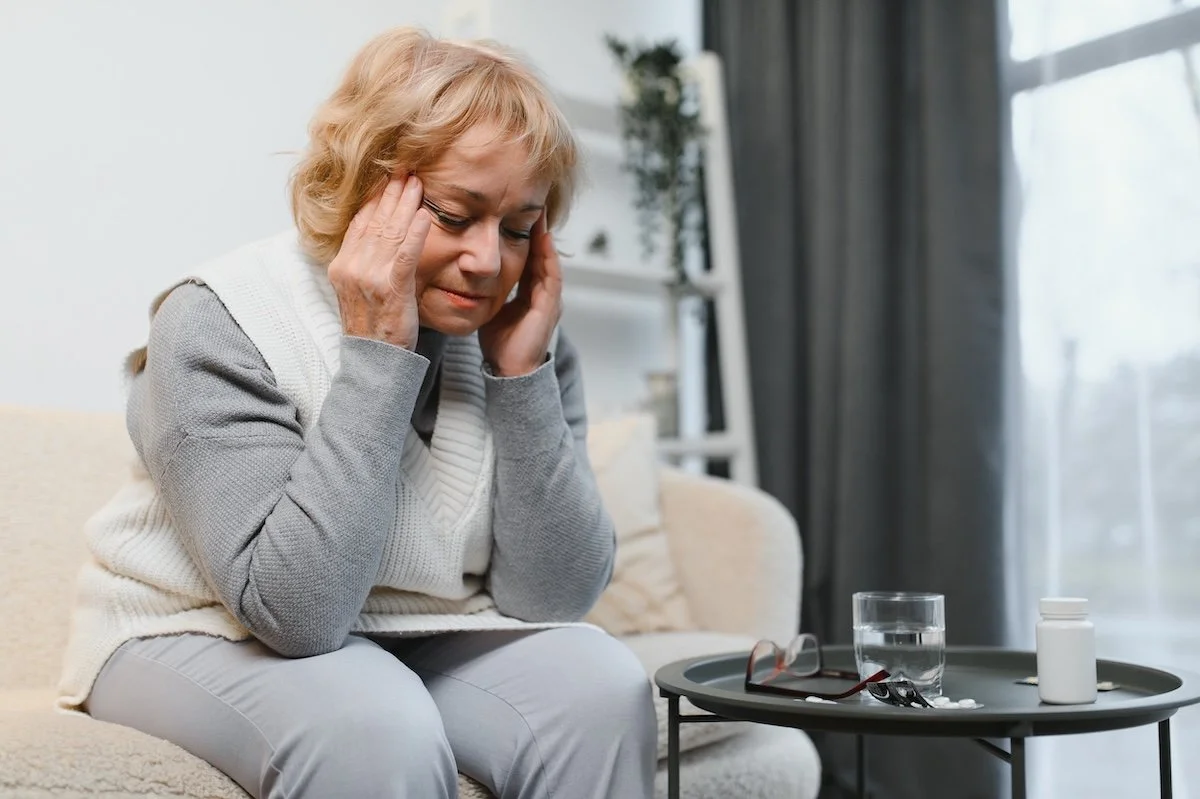











You searched your symptoms and got two answers. One set of pages says perimenopause. The other says thyroid. Both lists look like your life — and they overlap almost completely. The tell is usually not the symptom itself but its trajectory, which takes a history nobody has time to take in fifteen minutes.