
Night Sweats at 2am: Fast Relief Tips That Actually Work
Last updated: July 2026
Written by the Concierge Medicine of Westlake care team · Medically reviewed by Alexa Fiffick, DO, MBS, MSCP
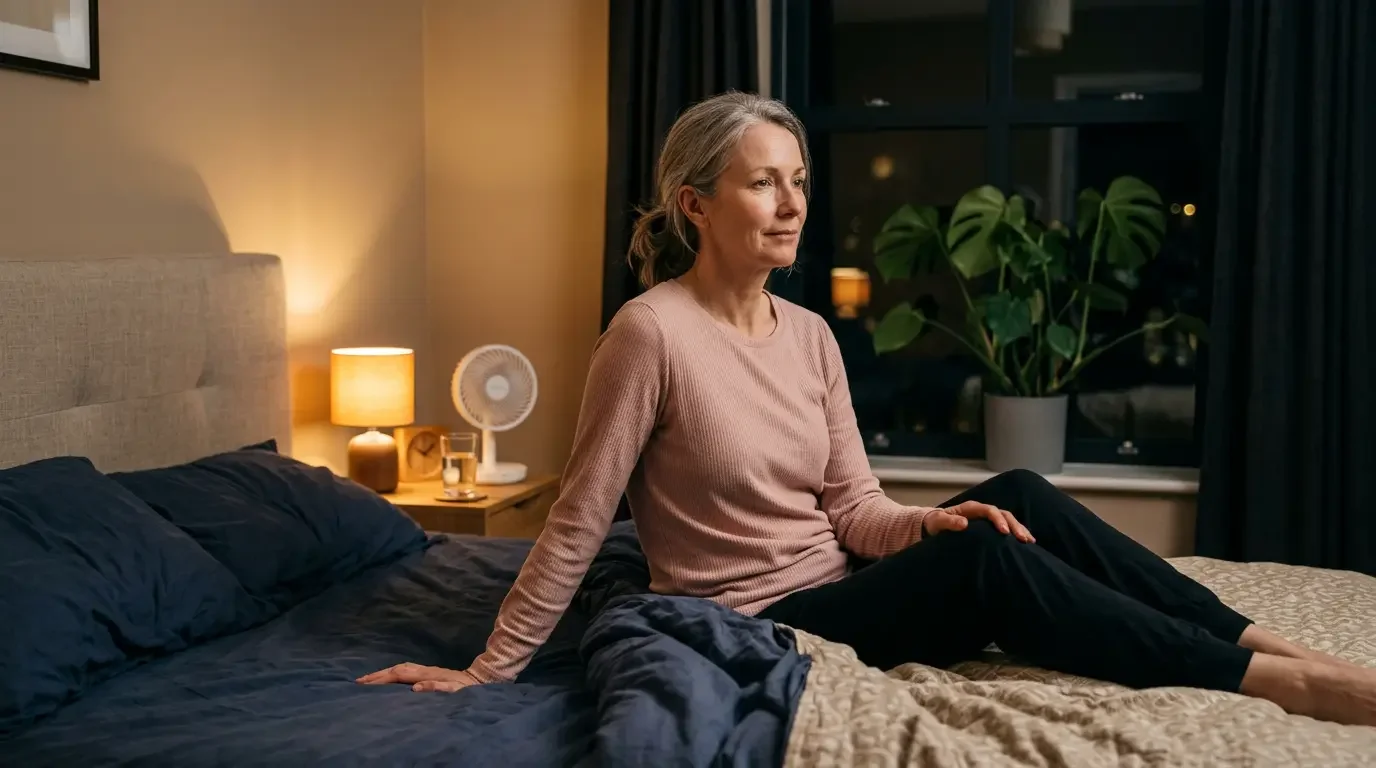
If you have ever woken up at 2 am with soaked sheets, a racing heart, and a strong urge to throw every blanket off the bed, you already know this is not a problem you can research your way out of in the moment. You need something you can do right now, tonight, before you try to fall back asleep.
This post is written for exactly that moment. It skips the long explanation of hormone physiology (I cover that elsewhere) and goes straight to what actually helps when you are standing in front of an open freezer at two in the morning wondering if this is your new normal. As a family medicine physician and Menopause Society Certified Practitioner, I see this exact scenario in my office almost every week, and I want you to have a plan that goes further than "turn down the thermostat."
Why night sweats happen in the first place
Night sweats are hot flashes that happen while you sleep. As estrogen levels fluctuate during perimenopause and menopause, the hypothalamus, the part of the brain that regulates body temperature, becomes more sensitive to small changes in your internal temperature. The result is what researchers describe as a narrowed "thermoneutral zone," meaning your body triggers a full cooling response (flushing, sweating, sometimes a racing heart) at temperature shifts that would never have registered before.
According to The Menopause Society, up to 80% of women experience hot flashes and night sweats during the menopause transition, and these vasomotor symptoms last an average of seven to ten years, with some women experiencing them for over a decade. They occur in up to 80% of women and last an average of 7 to 10 years, and may also contribute to sleep and mood issues that can negatively affect quality of life. That is not a small window to just white-knuckle through, which is exactly why a real plan matters. UCLA Health
The fastest things to try in the moment
When you wake up mid-sweat, the goal is rapid heat dissipation. In order of speed:
Get your feet and hands out from under the covers first. These areas have a high concentration of blood vessels close to the skin and cool quickly, which can bring your core temperature down faster than exposing your whole body at once.
Sip cool water. Staying hydrated helps your body regulate temperature more efficiently, and a cool drink gives an immediate, if brief, relief signal.
Step toward moving air rather than static cold. A fan pointed at the bed cools faster than air conditioning alone because evaporation, not just ambient temperature, is doing the work.
Change out of a damp shirt rather than trying to "wait it out" in it. Wet fabric traps heat against the skin and prolongs the discomfort even after the flash itself has passed.
Try a few slow, deep breaths. Paced breathing will not stop a hot flash already in progress, but it can shorten how long it takes your heart rate to settle afterward, which often decides whether you fall back asleep quickly or lie awake for an hour.
None of these steps require you to be fully awake or thinking clearly, which matters, because at 2 am you are not going to remember a complicated protocol.
Bedroom setup changes that reduce how often you wake up
The in-the-moment tricks above matter, but the bigger win is reducing how often you wake up at all. The Sleep Foundation recommends a bedroom temperature between 60 and 68 degrees Fahrenheit as the ideal range for sleep generally, and it becomes even more important when your body's temperature regulation is already working overtime. The ideal environment for sleep should be cool, ideally between 60 and 68 degrees Fahrenheit, achieved with a bedroom fan, open windows, or air conditioning.
A few changes tend to make the biggest difference:
Set the thermostat lower before bed rather than adjusting after you wake up sweating. Prevention beats correction here.
Swap heavy flannel or fleece bedding for breathable materials like cotton, bamboo, or moisture-wicking microfiber.
Layer instead of using one heavy blanket, so you can shed a layer without fully waking up or getting out of bed.
Keep a small towel and a change of sleepwear within arm's reach, not in a drawer across the room.
Move electronics away from the bed. Devices generate small amounts of ambient heat that add up over a full night.
What to avoid before bed
Some evening habits quietly make night sweats worse. If yours have gotten more frequent lately, take a look at:
Alcohol in the evening, which can trigger vasodilation (the widening of blood vessels) and intensify flushing overnight
Spicy food at dinner, a well-documented hot flash trigger for many women
Vigorous exercise too close to bedtime, since it raises core temperature right when your body needs to be cooling down for sleep
Caffeine later in the day, which can both disrupt sleep quality and heighten the body's stress response
An honest patient story
A patient of mine, a woman in her early 50s managing a full-time job and two teenagers, once told me she had started keeping a spare set of sheets pre-folded on a shelf because changing the bed at 2 am had become routine. She had tried a cooling mattress pad and cut back on wine with dinner, but nothing changed until we looked at her sleep environment and her hormone status together. Within a few weeks of a more complete plan, her middle-of-the-night wake-ups dropped from nearly every night to a handful per week. Her story is common. Isolated tips help some. A plan that connects your symptoms, your daily habits, and your hormone picture tends to help more.
"Night sweats are rarely just a bedroom problem," I tell patients. "They are your body telling you something specific is happening hormonally, and the goal is to address that, not just manage the mess it leaves behind."
When night sweats mean something more
Occasional night sweats are common and often manageable with the steps above. It is worth a conversation with your doctor if:
They are frequent enough to disrupt sleep most nights
They are accompanied by unexplained weight loss, fever, or swollen lymph nodes (which can signal something unrelated to menopause)
They started very suddenly rather than gradually
They are affecting your mood, energy, or ability to function at work or home
This is also where a longer visit matters. In a standard 15 minute appointment, there is rarely time to walk through your sleep environment, your daily habits, and your hormone history in the same conversation. If you want the fuller picture of how perimenopause and menopause symptoms get missed in a rushed visit, I wrote about that pattern in Why Women Need More Time With Their Doctor During Midlife.
If you are also dealing with hot flashes during the day, not just overnight, my post on Lake Erie's steamiest weeks and cooling night sweat survival goes deeper into seasonal humidity as an additional trigger here in Northeast Ohio. And if you are wondering whether hormone therapy could reduce how often these symptoms happen in the first place, I unpack what actually changed with the FDA's 2025 update in What Women Are Still Getting Wrong About Hormone Therapy in 2026. For a broader look at how perimenopause symptoms show up long before most women expect them, see Why So Many Women Feel Unprepared for Perimenopause.
The Real Fix Is a Plan, Not Just a Fan
Fast relief tips help you get through tonight. But if you are pre-folding spare sheets or dreading bedtime, that is a sign worth addressing with more than a cooling pillow. At Concierge Medicine of Westlake, I combine family medicine continuity with Menopause Society Certified Practitioner training, which means we can look at your night sweats alongside your full health picture, not as an isolated annoyance to manage around.
You don't have to figure this out in a rushed 15-minute visit. At Concierge Medicine of Westlake, Dr. Alexa Fiffick, DO, MBS, MSCP is a board-certified family medicine physician and Menopause Society Certified Practitioner, so the same doctor who manages your hormones also knows your full health history and has the time to connect the dots. See how membership works or schedule a visit. Prefer to talk first? Call 440-797-1871.





















The kids' physicals get booked. The sports forms get signed. Your own overdue appointment gets filed under "later," and later has a way of becoming next spring. For women in the sandwich generation, the fatigue behind that pattern is not always just a busy season — sometimes there's a hormonal piece underneath it.