
Women's Equality Day: Being Taken Seriously in the Exam Room

Last updated: August 2026
Written by the Concierge Medicine of Westlake care team · Medically reviewed by Alexa Fiffick, DO, MBS, MSCP
Every August 26, the country marks Women's Equality Day, the anniversary of the 19th Amendment's certification in 1920. It is a day built around the ballot box, but in my exam room, I think about a different kind of equality: whether a woman's symptoms get taken as seriously as a man's would. This post is for the patient who has already had a visit where she left with more questions than answers, and it is for anyone trying to figure out how to advocate for herself the next time she is sitting on an exam table wondering if she's just being dramatic. As a family medicine physician who also holds MSCP certification, I see this pattern constantly, and I want to name it plainly rather than dance around it.
Why This Day Belongs in a Health Conversation
Women's Equality Day commemorates the day in 1920 when Secretary of State Bainbridge Colby signed the certification of the 19th Amendment, guaranteeing women the right to vote nationwide. It was first observed in 1971 and formally designated by Congress in 1973, and it is proclaimed each year by the United States President.
The day has always been about more than the vote. It is about whether a woman's voice carries the same weight as a man's in the rooms that decide her life, and one of the most consequential rooms she walks into is an exam room. I think that connection is worth naming directly, because the same instinct to minimize a woman's account of her own experience that Women's Equality Day was created to push back against still shows up when a patient describes a symptom and gets told it is probably just stress, just age, or just hormones (as if hormones themselves aren't worth investigating).
The Pattern I Hear Almost Every Week
If you have felt dismissed in a doctor's office, you are not imagining it, and you are not alone. The pattern usually sounds something like this:
A visit where sleep, mood, libido, and irregular periods all needed attention, but there was only enough time to address one.
Being told a symptom is "just anxiety" or "just getting older" before anyone orders a single hormone panel.
Confusing, contradictory information about hormone therapy safety, especially since the FDA's black box warning removal in November 2025 left many women unsure what actually changed.
Labs that come back "normal" while the symptoms themselves are still very real and very disruptive.
None of these experiences mean something is wrong with you. They usually mean the visit did not have enough time or the right lens to see the full pattern.
What the Research Actually Shows
This is not just anecdotal. Research consistently shows women wait longer for diagnosis and treatment across a range of conditions.
Women having a heart attack wait approximately 37 minutes longer than men before contacting medical services, according to research published through the European Society of Cardiology.
A separate American Heart Association analysis found women waited an average of 11 minutes longer than men to be seen in the emergency room for chest pain, 48 minutes versus 37 minutes, per the American Heart Association.
A 2025 narrative review in Cureus found that gender bias continues to influence diagnostic pathways for young women, with symptoms like fatigue, chest discomfort, and multisystem complaints frequently misattributed to stress or psychosocial factors rather than investigated further, according to a review published via NCBI.
Historically, women were largely excluded from clinical trials until 1993, meaning many treatments still in use today were developed based on male biology, as reported by UN News.
I share these numbers not to be discouraging, but because naming a pattern is the first step toward not accepting it as normal.
What Being Taken Seriously Looks Like in Practice
In my own practice, I think about this constantly, because I am both my patients' primary care physician and their menopause specialist. That combination changes what a visit can actually accomplish.
"When I have the same patient in front of me for her thyroid, her blood pressure, and her hormone symptoms, I'm not guessing at the whole picture. I already have it. That's what lets me take a complaint seriously instead of triaging it down to the one thing we have time for."
Being taken seriously, in practical terms, looks like:
A visit long enough to actually connect sleep, mood, cycle changes, and physical symptoms in one conversation.
A hormone workup offered as a starting point, not a last resort after everything else has been ruled out.
A doctor who already knows your history, so nothing has to be re-explained from scratch every time.
Follow-up that treats your report of how you're feeling as clinical data, not as something to be talked out of.
If you're still working through the basics of what perimenopause even looks like before you get to this stage, our post on why so many women feel unprepared for perimenopause is a good place to start.
A Familiar Story, Told Without Names
A patient once described years of fatigue, irritability, and sleep disruption that three separate providers had attributed to stress and normal aging. She had been told her labs were fine more than once. What was missing was not more testing exactly, it was time. Once we had room in a single visit to walk through her full pattern, cycle changes, night sweats, mood shifts, and family history together, the picture that emerged pointed clearly toward perimenopause, and we built a plan from there. Nothing about her story was unusual. What was unusual was having forty-five uninterrupted minutes to actually hear it.
How to Advocate for Yourself at Your Next Appointment
Whether or not you're a patient here, these steps can help in any exam room:
Write your symptoms down beforehand, including when they started and how often they occur. A pattern on paper is harder to wave off than a pattern recalled on the spot.
Ask directly: "What would this look like if it weren't just stress or aging?" It forces the conversation to consider alternatives out loud.
Request the specific test you're wondering about by name, whether that's a hormone panel, a thyroid panel, or something else relevant to your symptoms.
If you leave a visit feeling unheard, it is reasonable to seek a second opinion. That is not overreacting, it is advocating.
For a deeper look at why longer visits matter for this exact reason, see why women need more time with their doctor during midlife.
Your Symptoms Are Data, Not Drama
Women's Equality Day is a reminder that equality is not something won once and then guaranteed forever. It has to be practiced, including in places as ordinary as a fifteen-minute appointment slot. If you've been told your labs are normal while you still don't feel like yourself, or that your symptoms are "just" anxiety, "just" stress, or "just" getting older, that "just" is worth questioning. Your account of your own body is clinical information, and it deserves a workup, not a dismissal. If you're navigating unexplained symptoms and want a fuller picture of what equitable menopause care should actually include, our post on why menopause care still isn't equal goes further into the systemic side of this issue, and our 2026 update on hormone therapy myths can help you sort fact from outdated fear heading into your next conversation with a doctor.
You don't have to figure this out in a rushed 15-minute visit. At Concierge Medicine of Westlake, Dr. Alexa Fiffick, DO, MBS, MSCP is a board-certified family medicine physician and Menopause Society Certified Practitioner, so the same doctor who manages your hormones also knows your full health history and has the time to connect the dots. See how membership works or schedule a visit. Prefer to talk first? Call 440-797-1871.



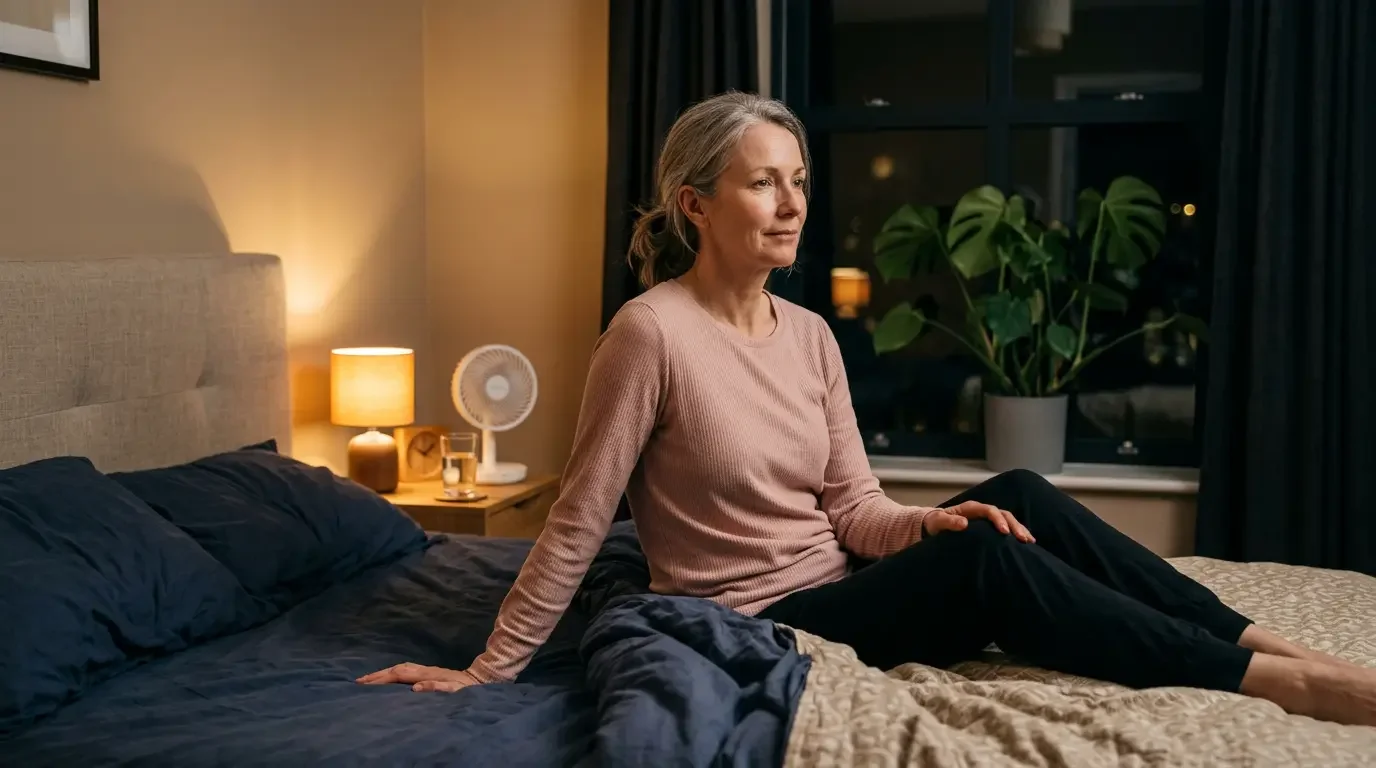





















You searched your symptoms and got two answers. One set of pages says perimenopause. The other says thyroid. Both lists look like your life — and they overlap almost completely. The tell is usually not the symptom itself but its trajectory, which takes a history nobody has time to take in fifteen minutes.